AKEELA SIGNATURE TREATMENT

Fixed Teeth in 72 Hours

A strategically planned implant treatment concept designed to move from diagnosis to fixed teeth through a carefully coordinated treatment pathway.

1994 Founded
72 Hour Protocol
20+ Years Implantology
THE CONCEPT

More than replacing teeth. Restoring function.

Fixed teeth in 72 hours is an advanced implant treatment concept where diagnosis, implant positioning and prosthetic planning are coordinated as one treatment pathway.

Tooth loss can affect chewing, appearance, speech and confidence. The purpose of treatment is therefore not only to replace missing teeth, but to create a stable and functional restoration suited to the patient's individual clinical condition.

Diagnosis → Planning → Precision → Function
Advanced dental treatment
AK-72 TREATMENT Designed around the patient
01

A treatment plan should be built around clinical suitability, not around a fixed formula for every patient.

AT A GLANCE

The 72 Hour Difference

A treatment philosophy built around efficient planning, strategic implant placement and timely restoration.

01 Strategic Planning

Diagnosis and treatment planning guide every stage of the protocol.

02 Immediate Loading

When clinically suitable, treatment can move toward immediate functional restoration.

03 Fixed Teeth

The objective is to provide a fixed restorative solution rather than prolonged dependence on removable temporary options.

04 Follow-Up

Post-treatment review and ongoing care remain an important part of the treatment journey.

THE PROCESS

72 Hour Journey

Scroll through the treatment pathway and discover how each stage connects to the next.

01
PHASE 01
ASSESSMENT

Diagnosis & Planning

Clinical assessment, imaging and treatment planning are used to understand the patient's condition before treatment begins.

Diagnosis comes first.
02
PHASE 02
PLACEMENT

Strategic Implant Placement

Implant positioning is planned around available bone and the intended restorative outcome.

Precision over shortcuts.
03
PHASE 03
IMMEDIATE LOADING

Fixed Teeth Pathway

When appropriate clinical conditions and primary stability are achieved, treatment may progress toward immediate functional restoration.

Function begins sooner.
04
PHASE 04
CONTINUITY

Review & Follow-Up

The restoration is reviewed and the patient is guided through post-treatment care and follow-up.

Treatment continues beyond day one.
AKEELA SIGNATURE TREATMENT

The Immediate Loading Approach

A carefully planned fixed-teeth protocol that can allow treatment to move toward immediate function when the clinical conditions are favourable.

72
HOURS From Implant to Function
01 →

Implant Placement

Strategic planning determines implant position according to available bone, anatomy and the intended restorative outcome.

02 →

Stability

Primary stability is an important consideration when immediate functional restoration is planned.

03 →

Function

When clinically appropriate, treatment can progress toward fixed functional restoration.

!

Clinical suitability comes first. Immediate loading is not automatically appropriate for every patient.

PRECISION TREATMENT APPROACH

The Key-Hole
Approach

A treatment philosophy focused on precise access, strategic use of available bone and efficient restorative planning.

Precision dental treatment approach
KEY-HOLE PRECISION ACCESS
KEY-HOLE

Precision access. Purposeful treatment.

The approach focuses on controlled access, efficient planning and the final restorative objective from the beginning.

01
CONTROLLED ACCESS

Small Access

Treatment can be planned around precise access rather than unnecessarily extensive surgical intervention where appropriate.

02
STRATEGIC PLANNING

Bone Utilisation

The available bone is assessed and incorporated into strategic implant planning.

03
EFFICIENT TRANSITION

Reduced Waiting

When clinically suitable, the approach can support a faster transition toward fixed teeth.

04
RESTORATIVE THINKING

Prosthetic Focus

Implant placement and the final restorative objective are considered together from the beginning.

PRECISION OVER EXCESS

Every part of the treatment has a purpose.

STRATEGIC IMPLANTOLOGY

Planned around available bone.

Strategic implantology considers the quality, quantity and location of available bone while planning the implant-supported restoration.

Implant distribution and prosthetic planning can be adapted to the individual clinical situation rather than applying exactly the same arrangement to every patient.

01

Strategic implant positioning

02

Consideration of cortical bone

03

Occlusal and restorative planning

04

Individualised treatment pathway

Dental implant planning
STRATEGIC THINKING Bone → Implant → Bite → Restoration
"

A patient with missing teeth needs more than implants. Treatment brings together stability, function, aesthetics and a realistic restorative plan.

Akeela treatment philosophy
IMPLANT OPTIONS

Different implants. Different purposes.

Implant selection depends on the clinical situation, available bone and treatment objectives.

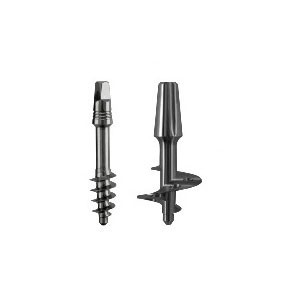
BCS Implant 01

BCS Implants

Basal Cortical Screw implants used as part of strategic implant treatment planning.

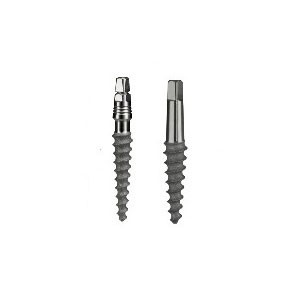
KOS Implant 02

KOS Implants

A distinctive implant design used within selected immediate loading treatment approaches.

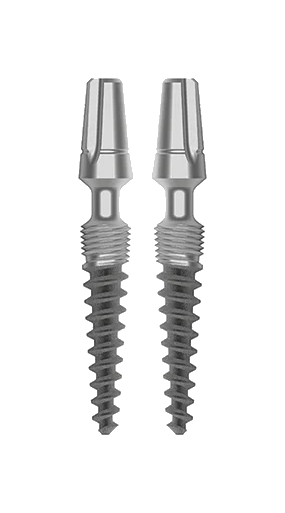
Pterygoid Implant 03

Pterygoid Implants

Used in selected posterior maxillary situations where conventional implant positioning may be challenging.

Zygomatic Implant 04

Zygomatic Implants

Specialised implants considered in selected cases of severe upper-jaw bone deficiency.

READY TO TAKE THE NEXT STEP?

Your treatmentstarts with a consultation.

Let our dental team evaluate your condition and discuss whether the Fixed Teeth in 72 Hours treatment pathway is appropriate for you.

● No.5/7, Habibulla Road 3rd Street, T. Nagar, Chennai-17
VISUAL EXPLANATION

Watch & Understand

Explore treatment concepts, procedures and clinical explanations through educational videos.

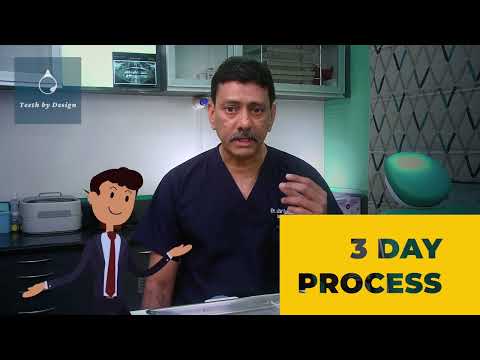
Fixed teeth treatment
01
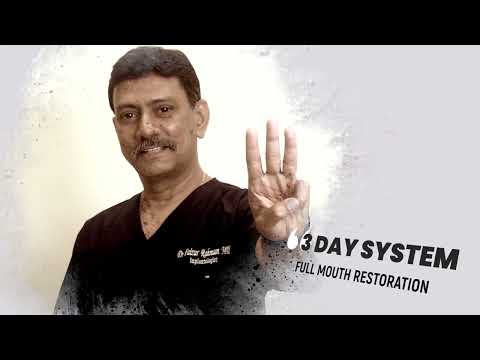
FIXED TEETH

Fixed Teeth in 72 Hours

Understand the treatment concept and overall workflow.

Immediate loading treatment
02
IMMEDIATE LOADING

Understanding Immediate Loading

See how immediate functional restoration is approached.

Strategic implantology
03
STRATEGIC IMPLANTOLOGY

Strategic Implantology Explained

Learn how implant positioning relates to available bone.

Key-hole approach
04
KEY-HOLE APPROACH

The Key-Hole Concept

A visual explanation of the precision treatment approach.

Dental implant placement
05
IMPLANTS

Understanding Implant Placement

Learn the basic principles behind implant placement.

Implant dentistry
06
TREATMENT

From Diagnosis to Fixed Teeth

Follow the key stages of an implant-supported treatment.

Dental consultation
07
CONSULTATION

Why Diagnosis Matters

Understand why planning comes before implant placement.

Dental technology
08
TECHNOLOGY

Planning the Implant Journey

Discover how planning supports the treatment pathway.

Full mouth rehabilitation
09
REHABILITATION

Full Mouth Rehabilitation

See how comprehensive treatment combines function and restoration.

Dental follow-up care
10
FOLLOW-UP

Life After Fixed Teeth

Understand the importance of maintenance and follow-up care.

IMPORTANT TO KNOW

Every case is different.

The 72-hour concept describes a treatment pathway, not a guarantee that every patient can receive the same treatment.

01

Clinical Evaluation

A proper examination and appropriate imaging are needed before deciding whether immediate loading is suitable.

02

Primary Stability

Implant stability is one of the important considerations when immediate functional restoration is planned.

03

Individual Planning

Implant number, positioning and prosthetic design depend on the individual clinical situation.

FAQ

Questions, answered.

Understand the most common questions about fixed teeth treatment and the 72-hour protocol.

No. Suitability depends on clinical examination, imaging, available bone, implant stability, treatment requirements and the overall health of the patient.

Immediate loading refers to placing a restoration into function soon after implant placement when the clinical conditions and implant stability are suitable.

It describes a precision surgical concept that aims to use controlled access and strategic implant positioning according to available bone.

Your dentist evaluates your oral condition, discusses your concerns and may recommend imaging and additional diagnostic assessment before creating a treatment plan.

Implant-supported restorations are designed as long-term treatment solutions, but their longevity depends on clinical factors, oral hygiene, maintenance and regular professional follow-up.

Yes. Follow-up allows the dental team to monitor healing, restoration function, hygiene and the long-term health of the implant-supported treatment.

CLINICAL REFERENCES

Learn more about Dental Implants.

For general information about dental implants, procedures and potential risks, refer to established clinical resources.